Podcast: Play in new window | Download
Subscribe: Apple Podcasts | Spotify | RSS
Featured Interview: Bridney Jordan
Bridney Jordan is back on The Muscle Car Place, and this time I wanted to get into some of the things most of us never think about when we’re buying tires.
Bridney has worked on both the commercial and consumer sides of the tire business and now manages the proprietary brands Lexani, Lionheart and Rolling Big Power for Turbo Tires. Moving from fleet tires into passenger and light-truck tires gave her a completely different perspective on how consumers choose what goes underneath their cars.
And I had a few questions.
Is a Big Tire Brand Really a Better Tire?
One of the first things we talked about was brand perception. We tend to assume that the biggest name on the sidewall must make the best tire. But Bridney pointed out that a huge brand may have enormous marketing budgets and major OEM contracts, while a smaller brand may be putting just as much effort into the actual consumer experience.
That doesn’t mean the big brands aren’t good. It means the name alone isn’t enough to tell you which tire is right for your vehicle.
One of the simplest ways Bridney suggested comparing manufacturers is to look at the warranty. How long are they willing to stand behind the product? What exactly are they promising? Is that warranty information easy to find?
That’s a pretty good place to start.
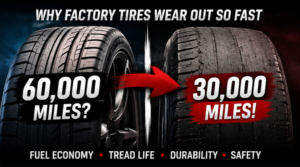
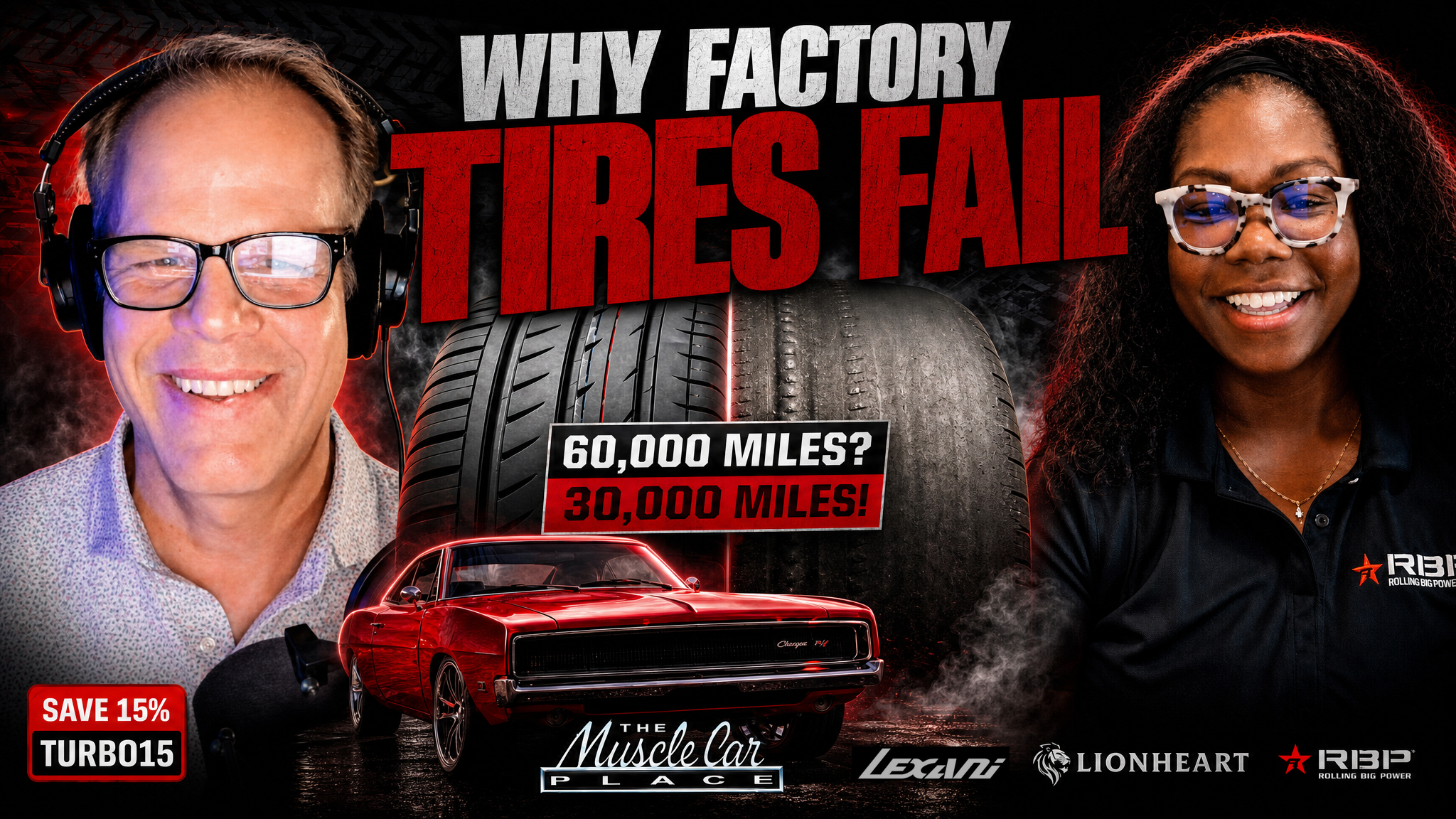
Why Didn’t My 60,000-Mile Tires Last 60,000 Miles?
I had a perfect real-world example for Bridney. The original tires on my 2022 hybrid minivan were rated for 60,000 miles. They were essentially finished at 30,000.
So why would an automaker put a 60,000-mile tire on a vehicle where owners may get nowhere near that?
Bridney explained that OEM tires are built around a series of competing goals. Fuel economy, tread life, durability and safety all have to work together, and sometimes improving one means giving up something somewhere else.
That made a lot of sense when I thought about the hybrid’s primary selling point: fuel economy. The manufacturer has an enormous incentive to make that vehicle as efficient as possible, and the tires are one piece of that equation.
When I replaced those tires, I chose something designed more around the mileage and all-season performance I wanted. I’ve already gotten 44,000 miles out of them, with plenty left.
Sometimes you have to decide what you want the tire to do instead of simply replacing it with whatever came on the car.

Does It Matter Where Your Tires Are Made?
We also talked about something that gets a lot of attention when you’re shopping for tires: where they’re manufactured.
Bridney has seen firsthand that the same tire brand and product line can be manufactured in different countries. Sometimes that’s simply because one factory has the equipment to produce a particular size or configuration that another factory doesn’t. The tire being made overseas isn’t necessarily a completely different product just because the country on the sidewall changed.
What really caught my attention was her perspective on how dramatically tire manufacturing technology has advanced outside the United States. Bridney said the machinery, processes and capabilities in many Asian tire plants have improved enormously since the 1970s and ’80s. In her view, the technology gap has narrowed considerably, and she wouldn’t automatically assume that a tire made overseas is an inferior product.
That doesn’t mean manufacturing in the United States isn’t important. It certainly is. But Bridney’s point was that country of origin by itself isn’t a good way to judge a modern tire. The technology, engineering and quality of the manufacturing process matter a lot more than simply reading the name of a country on the sidewall.
I thought that was an interesting perspective, especially because most of us probably make that judgment without knowing much about how modern tires are actually manufactured.

What Does Bridney Want These Brands to Become?
I asked Bridney what she wants Lexani, Lionheart and Rolling Big Power to accomplish over the next ten years.
Her answer was refreshingly simple.
She wants them to do exactly what they say they’re going to do.
If the company promises a certain mileage, warranty or performance characteristic, she wants the customer to get it. She wants somebody to buy a set, have a great experience and come back when it’s time for another set.
That may sound like a pretty basic goal, but in a world where marketing can sometimes get ahead of reality, I think it’s a pretty good one.
When Should You Replace Your Tires?
I also admitted something I’m not particularly proud of: I tend to run tires until they’re bald.
Bridney’s recommendation is considerably more conservative. Once you’re around 75 to 80 percent worn, she thinks it’s time to start planning for the next set rather than waiting until there’s practically nothing left.
Timing matters too. A tire that’s nearing the end of its life during mild weather is one thing. Heading into a Michigan winter with that same tire is another. Heat is also a major enemy of a tire, which becomes especially important as the tire gets heavily worn.
The takeaway isn’t necessarily that you need to throw away a tire the moment it reaches 75 percent wear. It’s that you should already be thinking about what comes next instead of waiting until the tread is gone to start shopping.

Tires Win Races
There’s a personal connection to all of this for us because Lexani, Lionheart, Rolling Big Power and SimpleTire supported Dallas during his summer racing season.
Seeing legitimate companies represented on his race suit and car was pretty special for both of us. But there’s also a practical reason tires matter so much in racing. You can have a great engine, suspension and driver, but if the tires aren’t working, none of it matters.
Bridney and I talk about Dallas’s racing program and what that support has meant to us, but that relationship is also part of a much larger partnership between these brands and The Muscle Car Place.
And that partnership has now created a pretty great deal specifically for TMCP listeners.

Save 15% on Tires with TURBO15
As part of the partnership between The Muscle Car Place, Turbo Tires and SimpleTire, TMCP listeners can now save on their next set of tires.
Through December 1, 2026, purchase four qualifying Lexani, Lionheart or Rolling Big Power tires through SimpleTire and use promo code TURBO15 to receive 15% off your purchase. Bridney confirmed the offer during our conversation and, importantly, this isn’t a 24-hour flash sale—the promotion is available through December 1.
If you’re already shopping for tires, give one of these brands a look and use TURBO15 at checkout. You’ll save 15%, and you’ll also help demonstrate the value of the TMCP community to the companies supporting the show.

Find Out More
If you’d like to learn more about Bridney and the brands she represents, check out Lexani Tires, Lionheart Tires and Rolling Big Power Tires. Each brand has its own product information, social channels, newsletters, event coverage and customer testimonials.
You can purchase all three brands through SimpleTire and use TURBO15 on four qualifying tires through December 1, 2026.
____________________________________________________________________________________________________________________________________________
This interview sponsored by our friends at National Parts Depot – your premier source for muscle car restoration parts!