
Podcast: Play in new window | Download
Subscribe: Apple Podcasts | Spotify | RSS
A Thanksgiving Feast of Horsepower, History, and Collector-Car Choices
Thanksgiving dinner comes with plenty of important decisions. Turkey or ham? Pumpkin or pecan? And if you bought a collector car today, which one could you sell next Thanksgiving for enough profit to pay for the whole meal?
Rob Kibbe welcomes Rick Schmidt of National Parts Depot back for another Thanksgiving edition of Ask Rick, featuring two rounds of automotive matchmaking. The first challenge has a $30,000 purchase limit and allows some hands-on improvement. The second removes the price ceiling—but also takes restoration work off the table. Buy wisely, hold for a year, and see whether the market will pay for dinner and dessert.
Before choosing cars, Rick shares the family history behind two special Pontiacs, explains why a correctly finished undercarriage matters, and discusses where he would sell a quality classic today. There’s also a Thanksgiving food debate that proves Rick has opinions about considerably more than cars.
Prices and bids mentioned below reflect the listings at the time of recording. Rick’s selections are his opinions within the episode’s hypothetical challenge.
Celebrating Pontiac’s Centennial at Hilton Head
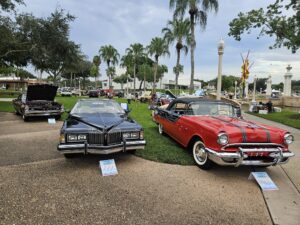
Rick is preparing to take two cars to the Hilton Head Island Concours d’Elegance, where Pontiac’s 100th anniversary is among the featured celebrations: a 1955 Pontiac Star Chief convertible and a 1960 Pontiac Bonneville two-door hardtop.
The Star Chief illustrates a familiar collector-car lesson: a beautiful restoration doesn’t necessarily mean a well-sorted automobile. Purchased at auction, it looked impressive but arrived with extensive mechanical shortcomings. Rick’s team gradually worked through the problems until it finally ran and drove as well as it looked.
That effort has already earned recognition. Rick reports that the Star Chief won its Pontiac class at the Lake Mirror Classic.
The Bonneville’s story is more personal. Rick’s father oversaw its restoration because his mother—Rick’s grandmother—had driven an identical car. Finding the right example meant finding the right combination: Coronado Red paint and a tri-tone red interior.
Remarkably, the car they located still had an exceptionally preserved original interior. Rick recalls that its original owner reportedly drove without shoes, helping explain the unusually clean carpeting. The restoration preserved that interior while bringing the rest of the car up to an extraordinary standard.
Rick’s family spent years tracking down new-old-stock Pontiac parts for the project. More than 25 years after its restoration, the Bonneville remains a standout in the collection—and a connection to the woman whose car inspired it.
Restoring an Undercarriage: Why Doing It Correctly Matters
Rob revisits a question about finishing the underside of a Mustang, prompting Rick to explain why he favors researching the factory treatment before reaching for a heavy coating.
His point is straightforward: driving a classic and restoring its underside correctly can go together.
Factory finishes weren’t necessarily identical across manufacturers, model years, or even assembly plants. For Mustang-specific details, Rick points to NPD’s Ford Project Director, Scott Halseth, an MCA judge familiar with those distinctions.
Correct detailing also influences how a future buyer reads the rest of the restoration. An underside finished with care suggests that the owner researched the car and paid attention to details throughout the project.
Rick isn’t saying every driver needs a spotless show-car chassis. He’s questioning the assumption that using a car requires covering everything underneath with bed liner or another heavy coating. A properly finished undercarriage can be driven, maintained, and cleaned.
His strongest caveat concerns road salt: regardless of the coating, exposing a treasured classic to salted roads is another proposition entirely.
Where Would Rick Sell a Classic Car Today?
Rick’s first answer is Mecum Auctions, and he openly acknowledges NPD’s sponsorship relationship with the company.
He explains that the relationship reflects his confidence in Mecum’s professionalism, ethical standards, and handling of difficult situations. For Rick, the way an auction company treats people matters alongside its ability to sell cars.
Bring a Trailer also earns praise, particularly for its detailed photography, presentation, and the quality of vehicles accepted onto the platform.
For a quality collector car, Rick believes a reputable auction or a well-presented online listing offers strong access to an appropriate audience. Simply parking at a shopping center with a sign in the windshield would no longer be his preferred approach.
He also discusses the frustrations of Marketplace communication and the concerns that come with inviting unfamiliar shoppers onto private property.
The larger lesson: the selling venue and the quality of the presentation deserve as much thought as the asking price.
Round One: A $30,000 Budget to Pay for Next Year’s Turkey
The first challenge focuses on distinctive cars that made an impression through their design, publicity, or place in automotive history.
The assignment: buy for less than $30,000, make a plan around this year’s Thanksgiving table, and sell by Thanksgiving 2027. Mechanical improvements are allowed—but the money spent making them counts against the potential reward.
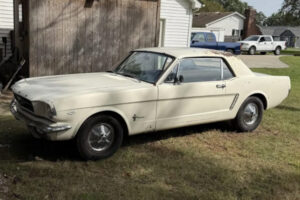
1965 Ford Mustang: A Good Project, but How Much Profit?
The first contender is an early-production Mustang coupe built June 10, 1964—the kind enthusiasts commonly call a 1964½ Mustang, although it is a 1965 model.
Rick explains that “1964½” is useful shorthand for identifying the early cars and their production features, including generator-equipped electrical systems.
This example has several appealing specifications:
- D-code 289 four-barrel V8
- Originally equipped with a four-speed manual transmission
- Factory air conditioning
- A largely complete project-car presentation
At the time of discussion, bidding was approximately $4,580, with several hours remaining.
Rick sees rust and work ahead, but he doesn’t view it as a hopeless shell. His approach would be to address the engine, brakes, and necessary mechanical systems, then leave the cosmetics alone.
He estimates that a properly running and driving example could bring approximately $10,000. The difficulty is getting there profitably. A higher purchase price, parts, and mechanical work could consume much of the difference.
It’s an appealing entry into classic Mustang ownership. As a one-year profit exercise, however, the margin looks tight.

1993 Dodge Viper RT/10: Television History Meets a Longer Investment Horizon
Next comes a red 1993 Dodge Viper RT/10 showing approximately 45,000 miles, with an unusual connection to Pamela Anderson’s television series V.I.P.
Rob notes that the listing describes use in driving scenes and stunts, along with a line lock. The television connection adds a talking point, although how much it matters depends on the buyer.
Rick makes no secret of preferring later Vipers. Their styling and overall development appeal to him much more than the earliest open-top cars.
But personal taste and market potential are separate questions.
He sees early Vipers trading at comparatively accessible prices alongside their more expensive successors. Over a longer ownership period, he believes the first-generation cars could benefit from broader Viper appreciation.
The challenge is the one-year deadline. Rick isn’t convinced that meaningful appreciation will arrive quickly enough to fund next Thanksgiving’s meal. It could also require substantially more money upfront than the Mustang.
His assessment: interesting longer-term potential, but an uncertain fit for this particular challenge.
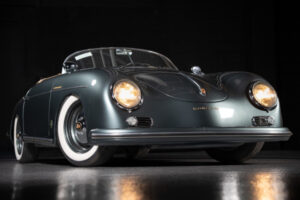
Beck Speedster: Can the Replica Beat the Originals?
The third contender is a Beck Speedster, a reproduction of the classic Porsche 356 Speedster.
Rick is impressed by how convincingly this example captures the original car’s appearance. He compares its appeal with a well-executed Cobra replica: the quality of the presentation and the ownership experience can make a substantial difference.
Bidding was approaching $26,000, with several hours remaining, so staying within the purchase limit was still an open question.
Unlike the Mustang, this car didn’t appear to require a mechanical rescue. Its appeal was already visible: classic styling, an inviting open-car experience, and a purchase price far below that of a genuine Porsche Speedster.
Rick challenges the assumption that a replica automatically has little lasting appeal. In his view, a convincing, enjoyable example can attract buyers who want the experience and appearance without the cost of an original.
Rick’s $30,000 Challenge Winner: The Beck Speedster
The result may surprise listeners who expected NPD’s Mustang expert to choose the Ford.
Rick likes the Mustang, but the cost of getting it sorted could leave little profit. He sees potential in the Viper, but prefers a longer holding period.
For this hypothetical one-year exercise, he chooses the Beck Speedster.
View the Beck Speedster listing
Round Two: No Budget Limit—and No Restoration Work
For the second round, Rob removes the purchase-price ceiling and adds a restriction: no project work.
The assignment is to buy a finished car, hold it for a year, and sell it for enough profit to cover the Thanksgiving dinner—and the pie.
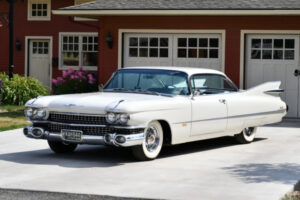
1959 Cadillac Coupe de Ville: Big Fins and Big Expectations
The 1959 Cadillac Coupe de Ville brings unmistakable styling and a claimed 9,500 original miles.
The listing describes museum history and a restoration, making this a car Rick would want to assess carefully. Low mileage alone doesn’t settle the question; the quality of the restoration and the survival of original components matter.
At an asking price of $122,900, Rick wants to see an exceptional automobile in person. He would expect a car with that mileage claim to retain outstanding original interior materials and substantial original trim and brightwork.
If the condition supports the description, he sees it as a potentially strong collector car with room to appreciate.
Rob also makes an important distinction: the listing’s suggestion that it deserves a place at Pebble Beach is not confirmation that it has actually been shown there.
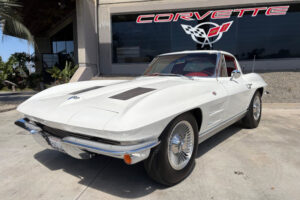
1963 Chevrolet Corvette Split-Window: Rick’s Favorite Makes a Strong Case
The next contender quickly gets Rick’s attention: a 1963 Corvette split-window coupe in white with a red interior.
Its specifications include:
- L76 327-cubic-inch V8
- 340 horsepower
- Four-speed manual transmission
- Aluminum knock-off wheels
Rick loves the C2 Corvette’s design, and this combination checks several of his boxes. He also notes that the carbureted engine avoids some of the specialist setup demands associated with the period fuel-injected versions.
At the time of recording, bidding stood around $110,000, with the final price still unknown.
The Cadillac makes a strong impression, but Rick believes the Corvette’s styling reaches a broader audience. That wider appeal helps push it ahead in his one-year comparison.
1981 DeLorean DMC-12: Movie Fame Doesn’t Guarantee Appreciation
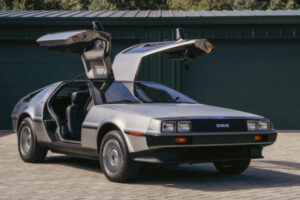
The third contender is a one-owner 1981 DeLorean showing approximately 4,000 original miles.
With stainless-steel bodywork, gullwing doors, and its association with Back to the Future, the DeLorean easily meets the challenge’s requirement for a car that made a lasting impression.
Bidding was approximately $62,500 when Rick reviewed it. He recalls seeing other low-mileage examples exceed $80,000 at auction, but remains unconvinced about the next year’s upside.
His concern is the relationship between the fantasy and the ownership experience. A car can have enormous cultural appeal without delivering the driving experience a buyer imagined.
Rick suspects the market may have already satisfied many of the people who most wanted one. For this challenge, he favors the Cadillac and Corvette over the DeLorean.
Rick’s No-Limit Winner: The 1963 Corvette Split-Window
The Cadillac earns serious consideration, but the Corvette takes the second round.
Rick’s deciding factor is its combination of design, desirability, and a broader potential audience. For this particular one-year exercise, the split-window is his choice to pay for dinner and dessert.
Bonus Round: Would Rick Buy a Cybertruck?
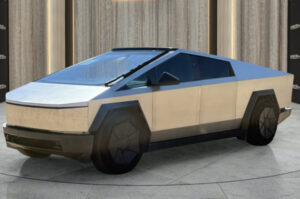
Rob finishes by presenting a used Tesla Cybertruck listed just under $80,000, with approximately 33,790 miles.
Rick doesn’t see it as a likely one-year appreciation play. He also questions whether it will develop lasting collector appeal.
But that doesn’t mean he dismisses its design.
Rick appreciates vehicles willing to look unusual and make a statement. Even when a particular vehicle isn’t something he wants to own, he can respect its willingness to break away from familiar shapes.
For the Thanksgiving challenge, though, the Cybertruck doesn’t displace either winner.
Which Car Would You Bring to the Thanksgiving Table?
Rick’s selections are:
- Under $30,000: Beck Speedster
- Unlimited purchase budget, no restoration work: 1963 Chevrolet Corvette split-window coupe
The discussion highlights a useful distinction: a car can be a great ownership choice without being the strongest short-term resale choice. Purchase price, repair costs, presentation, buyer demand, and timing all influence the outcome.
Would you take the Mustang project, gamble on the television Viper, or follow Rick toward the Speedster? And with the budget limit removed, would you choose the Cadillac, Corvette, or DeLorean?
Listen to The MuscleCar Place Episode #664 for Rick’s reasoning, the Thanksgiving debate, and another round of collector-car conversation with Rob Kibbe.
____________________________________________________________________________________________________________________________
Save 15% on Your Next Set of Tires
Need tires for your muscle car, truck or daily driver? Save 15% on a set of four participating Lexani, Lionhart or RBP tires through SimpleTire by using promo code TURBO15 at checkout. It’s an easy way to shop for the tires you need online and have them shipped directly to your home or a nearby installer.
____________________________________________________________________________________________________________________________
This interview sponsored by our pals at National Parts Depot – your premier source for muscle car restoration parts!