TMCP #665: SEMA 2026 Part 1 – Trans Am Worldwide’s “New” 70 SS, Phil-Jeremy-and Josh from Roadster Shop, New Holley Goodies, CTEK Chargers, Fat Fender Garage’s on their Own Chassis, and the Hellcat Bluesmobile!
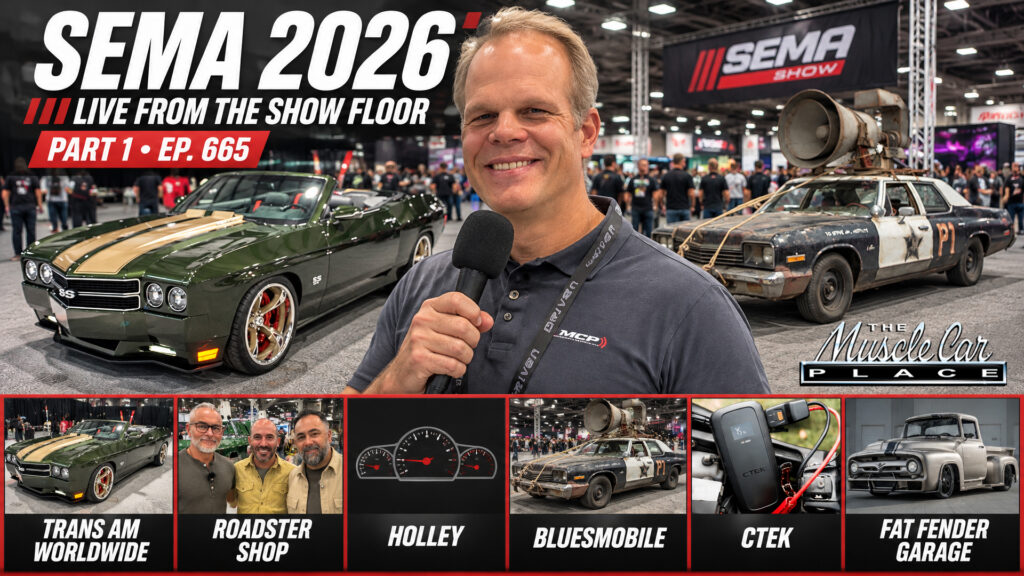
We’re kicking off our SEMA 2026 coverage straight from the show floor in Las Vegas while the show is still going. For Part 1, Rob Kibbe goes from a modern take on the 1970 Chevelle SS to a Hemi-powered Bluesmobile that drove Route 66 to get here.
Tod Warmack of Trans Am Worldwide explains how his team transforms a sixth-gen Camaro into the 70/SS, and Holley’s John McLeod talks Classic Instruments, custom gauges, and how his racing background fits into his work today. Then Phil and Jeremy Gerber and Josh Henning of Roadster Shop and the Oil & Whiskey podcast get into what happens when a few shops go all in on the cars they grew up loving. Suddenly, Fox-body Mustangs, third-gen Camaros, and G-bodies are all over the SEMA floor.
Arne Toman, best known for his Cannonball runs, tells us why he put a Gen III Hemi in his Bluesmobile and what it took to make it a car he could drive to Vegas and back. Steve Hayes of CTEK breaks down battery charging and maintenance for everything from lead-acid to lithium, and Jason Noel of Fat Fender Garage walks us through his custom 1956 Ford pickup and how building trucks for fun turned into a business.
TMCP #664: Ask Rick’s Thanksgiving Car Challenge—Which Cars Could Pay for Dinner in 2027?

Could your next collector-car purchase pay for next year’s Thanksgiving dinner? Rob Kibbe welcomes Rick Schmidt of National Parts Depot for a Thanksgiving edition of Ask Rick, featuring two car-buying challenges. First, Rick has a $30,000 purchase budget to choose between an early 1965 Mustang project, a 1993 Dodge Viper with a television connection to Pamela Anderson’s V.I.P., and a Beck Speedster replica. Which offers the best chance of turning a year of ownership into turkey money?
Then the budget limit disappears—but restoration work is off the table! A 1959 Cadillac Coupe de Ville, a 1963 Corvette split-window coupe, and a low-mileage 1981 DeLorean compete to fund dinner and dessert. Rick weighs condition, repair costs, buyer appeal, and potential appreciation before making his picks. Rob even throws a used Tesla Cybertruck into the conversation for a bonus round.
Rick also shares the family connection behind his beautifully restored 1960 Pontiac Bonneville and the mechanical rescue of his 1955 Star Chief convertible as he prepares for Pontiac’s centennial celebration at Hilton Head. Along the way, he explains why factory-correct undercarriage details matter and why Mecum Auctions and Bring a Trailer would be among his preferred places to sell a quality classic.
And because it wouldn’t be Thanksgiving without a little friendly disagreement, Rob quizzes Rick on the holiday menu—from cranberry sauce to casseroles and the all-important pie selection. Bring your appetite and pick your winner!
TMCP 663: SEMA 2026 Preview with Dan Kahn: Big Trends, Building Connections & Making the Most of the Show
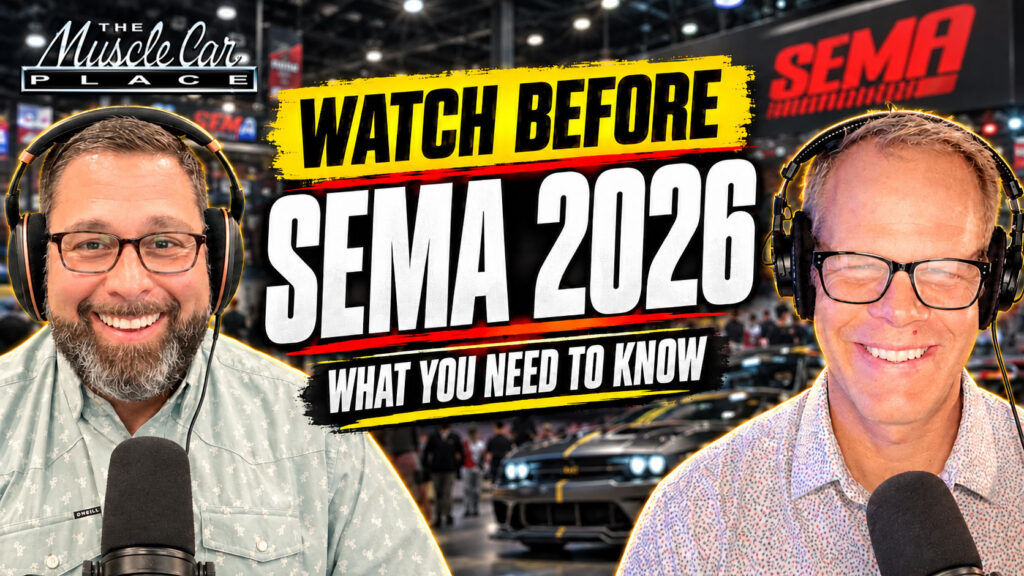
This week, Rob welcomes longtime friend, former podcast co-host, and Kahn Media founder Dan Kahn for a preview of SEMA 2026! Dan attended his first SEMA Show in 1998 as a teenage automotive magazine editor, and this year his agency celebrates its 18th anniversary during the show. He shares what builders and automotive content creators can do to turn a trip to Las Vegas into lasting opportunities.
For up-and-coming builders, Dan explains why exploring the smallest booths can be just as valuable as checking out the biggest reveals. We discuss discovering new products, approaching manufacturers, scheduling meetings, and building relationships before asking for support. Dan also highlights SEMA’s education sessions as an opportunity to learn about running a business and connect with others facing similar challenges.
On the content side, we explore how creators such as Riley’s Rebuilds and Larry Chen have built opportunities by sharing their interests and consistently doing the work. Dan explains why useful information, curiosity, and respect matter—and why creators covering SEMA should arrive prepared while leaving room for unexpected discoveries.
Then it’s time to predict the next big trends! Dan shares why classic Ford trucks could gain more ground, carbon fiber components may reach more builders, and complete chassis packages and crate engines will continue shaping the hobby. He also explains why younger enthusiasts tackling ambitious projects with ’90s and 2000s vehicles give him hope for the future. Plus, we wrap things up with a little Star Trek trivia!
TMCP 662: The Holley MoParty 2026 Spectacular! Live From Bowling Green
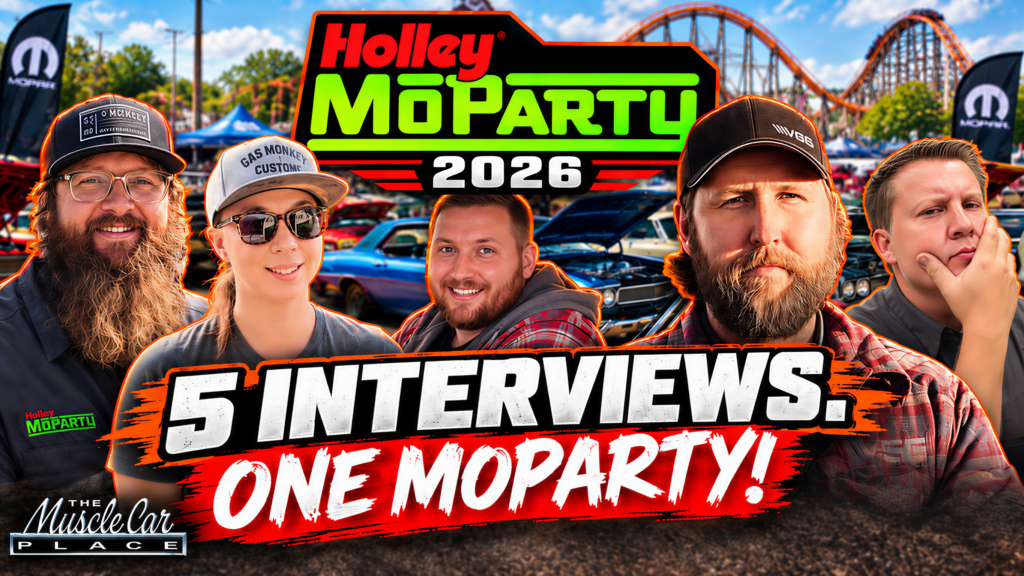
The Muscle Car Place returns to Holley MoParty in Bowling Green, Kentucky! Kirk Hansen, Jimmy Morrison, and Nathan Warren bring home five interviews with the creators, builders, and enthusiasts behind some of the event’s most memorable cars and stories.
Derek Bieri of Vice Grip Garage discusses rescuing forgotten cars, keeping his videos authentic, and his plans to turn a historic Chevrolet dealership into an automotive museum. Tommy Boshers shares his new chapter on YouTube, building a Chevy C10 with his son Hammer, and the heartfelt story behind a ’67 Plymouth GTX restored to honor its late owner’s wishes.
Dylan McCool introduces his ’65 Dodge Monaco, which combines classic styling with modern Hemi power and Chrysler 300 comforts, plus his old-school “Cornbread” Coronet. Greg Huizenga explains the surprising combination behind his 720-wheel-horsepower turbo Cherokee, while Jennifer Harrington of The Gearhead Girl shares her automotive journalism background, family Mopar roots, and eclectic collection of project cars.
From father-and-son builds to unconventional race vehicles, this episode celebrates the people who keep our hobby moving forward. Our first YouTube video features Derek and Tommy, with more MoParty interviews coming soon! Find photos, guest links, and the full episode write-up at,
https://themusclecarplace.com/podcasts/the-muscle-car-place-podcast/
TMCP #661: ASK RICK – The ROI of Going to the SEMA Show and Fun Before Halloween Car Flips – Corvette vs GNX vs Zephyr!

It’s October, and Rick Schmidt of National Parts Depot is back for a Halloween edition of Ask Rick! This month, we tackle the business case for SEMA, explore the automotive career Rick would choose if NPD didn’t exist, and put his collector-car knowledge to work with two Halloween buying challenges.
First, is SEMA worth the trip? Rick and Rob discuss the expense, preparation, and potential return of exhibiting, along with the value of introducing new products, generating media coverage, and maintaining industry relationships. Rick also compares SEMA to the Hershey swap meet: business increasingly happens online, but there’s still value in connecting face to face.
For our first Rick on Cars challenge, the mission is simple: spend no more than $10,000 buying a vehicle, clean it up, and sell it within three weeks to fund a Halloween bash. The candidates are a 2001 Mustang Bullitt, a 1988 Chevrolet K2500 diesel 4×4, and a 1967 Mustang Coupe. Rick weighs repair needs, negotiating opportunities, and the size of the potential buyer pool.
For round two, the budget disappears, the timeline stretches to a year, and every car must be black! Would Rick choose a dual-quad 1957 Corvette, a V12-powered 1941 Lincoln Zephyr Coupe, or a 1987 Buick GNX with only 30 miles?
The Corvette raises questions about authenticity, the Lincoln offers distinctive styling and usable enjoyment, and the GNX presents the dilemma of owning a valuable car you can barely drive. A bonus 1976 Cadillac Fleetwood Castilian wagon adds one final temptation—even though it doesn’t qualify for the all-black challenge!
Post-recording auction updates: the ’67 Mustang ultimately sold for $20,000, while the 30-mile GNX brought an incredible $427,000. Those results add plenty to the discussion about buying well and leaving room for a future profit.
Which would you choose—and would you actually drive it?
TMCP #660: Nathan Warren’s Crown Vic General Lee – Building a Full-Function Drift Car
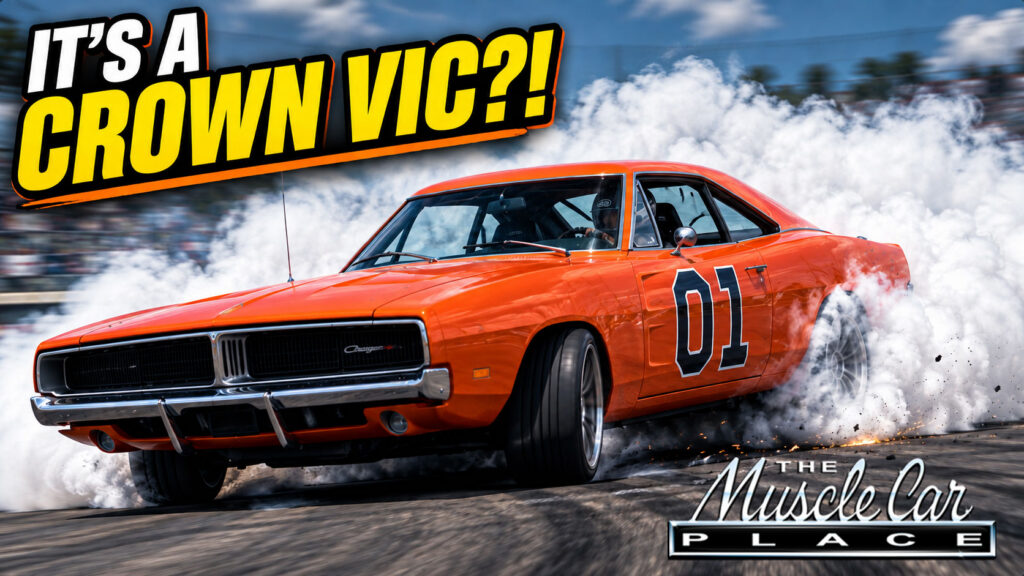
What if I told you this drifting General Lee didn’t begin life as a Dodge Charger?
This week, I’m joined by Nathan Warren of Warren Customs to discuss one of the wildest General Lee builds we’ve ever featured. Created for professional stunt performer Kevin Waterman, this purpose-built drift car started as a former police-package Ford Crown Victoria.
Nathan removed nearly the entire Crown Vic body, leaving behind its frame, floor, firewall, and key structural components. They then assembled a 1969 Dodge Charger body around it using reproduction sheet metal, custom supports, fiberglass doors, and plenty of creative fabrication.
This wasn’t built to be a disposable stunt-car shell. The doors open and close, the hood and trunk function, and the hideaway headlights, taillights, and interior controls all work. Nathan even retained the Crown Victoria’s interior hood release—and discovered that its trunk hinges lined up remarkably well with the Charger trunk lid.
The project later received an LS3, six-speed transmission, certified roll cage, rear passenger seating, digital gauges, custom wheels, and additional suspension work. The result is a convincing General Lee that Kevin can drift, drive hard, and use to give passengers full-throttle thrill rides.
Nathan also shares why the finished car remained hidden for nearly two years, how its original Formula Drift plans changed, and what happened when the “General Drift” finally debuted at the NOPI Nationals Motorsports Supershow in Atlanta.
From the grandstands, almost no one could tell that it wasn’t a real Dodge Charger. They simply saw the General Lee sliding around the course in a massive cloud of tire smoke!
You can learn more about Nathan and his work through Warren Customs.
TMCP #658: Ask Rick | Trans Am vs. SHO vs. IROC-Z—Which White Car Wins?

This week on Ask Rick, we’re celebrating Labor Day with a collector-car challenge built around the old rule about putting away your white clothes. Rick has $35,000 to choose between three very different white performance cars: a 1975 Pontiac Trans Am, a five-speed 1994 Ford Taurus SHO, and a 1989 Chevrolet Camaro IROC-Z. He must drive his selection for one year and then sell it—so which car offers the best combination of enjoyment, collectibility, and return on investment?
We also answer a listener’s question about Rick’s one-off 2001 Chevrolet Silverado Fox concept truck, a supercharged dirt-bike hauler that General Motors says can never be registered for street use. Rick explains why classic Mustangs remain relatively affordable, why overlooked cars from the 1970s through the ’90s are gaining collector interest, and which unusually colored car he would choose in a second $50,000 auction challenge.
TMCP #652: Double Bonus Racing Show! | Brandon Setzer on Late Model Racing | Tyler West on RacingJunk & Grassroots Motorsports
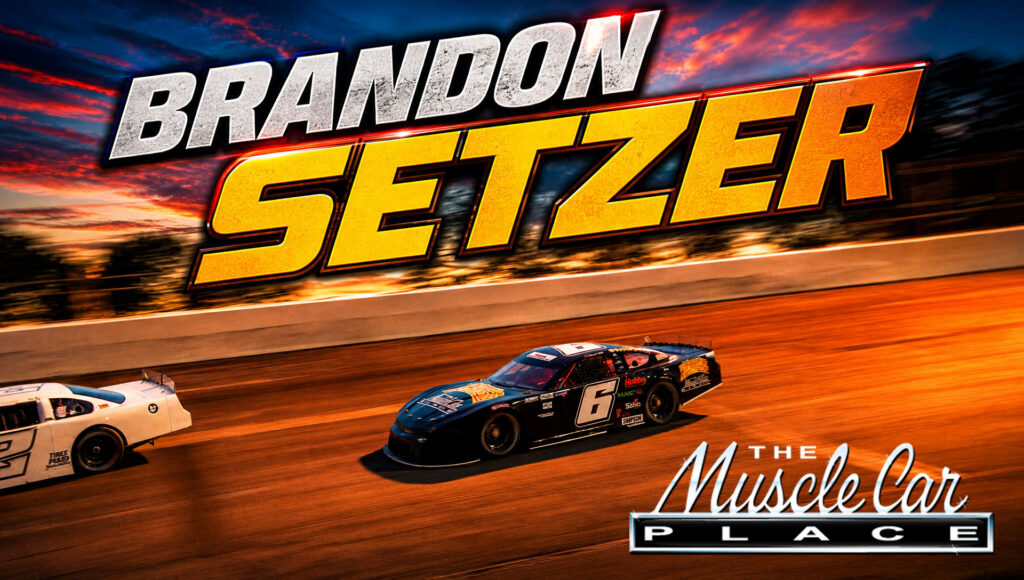
This week on The Muscle Car Place Podcast, we’re bringing you a Double Bonus Racing Show featuring two guests who are helping shape the future of grassroots motorsports from very different angles. First, Robert sits down with Brandon Setzer of Setzer Racing and Development to discuss the world of Late Model racing, driver development, and what it really takes to climb the ladder toward NASCAR. As the son of NASCAR Truck Series veteran Dennis Setzer, Brandon grew up in racing and now dedicates his career to helping young drivers accelerate their learning curve behind the wheel.
Brandon explains the differences between Pro Late Models, Super Late Models, and Late Model Stocks while sharing insights from coaching some of the sport’s rising stars. He also discusses how his program balances performance, affordability, and long-term driver growth. For listeners following Dallas Kibbe’s racing journey, this conversation offers a firsthand look at the team helping him make the transition into Late Model competition.
In the second feature interview, Robert catches up with Tyler West of RacingJunk at the 2026 High Performance Expo. While RacingJunk is widely known as the go-to marketplace for race cars, trailers, engines, and performance equipment, Tyler’s passion extends far beyond classifieds. The conversation explores the challenges facing local racetracks, the importance of grassroots motorsports, and how facilities are adapting to attract new fans and remain viable in a rapidly changing world.
Together, these interviews provide a fascinating look at the people working behind the scenes to develop drivers, support racetracks, and keep grassroots racing thriving for future generations.
TMCP #642: Mike Finnegan Returns – Life After Roadkill & the YouTube Era
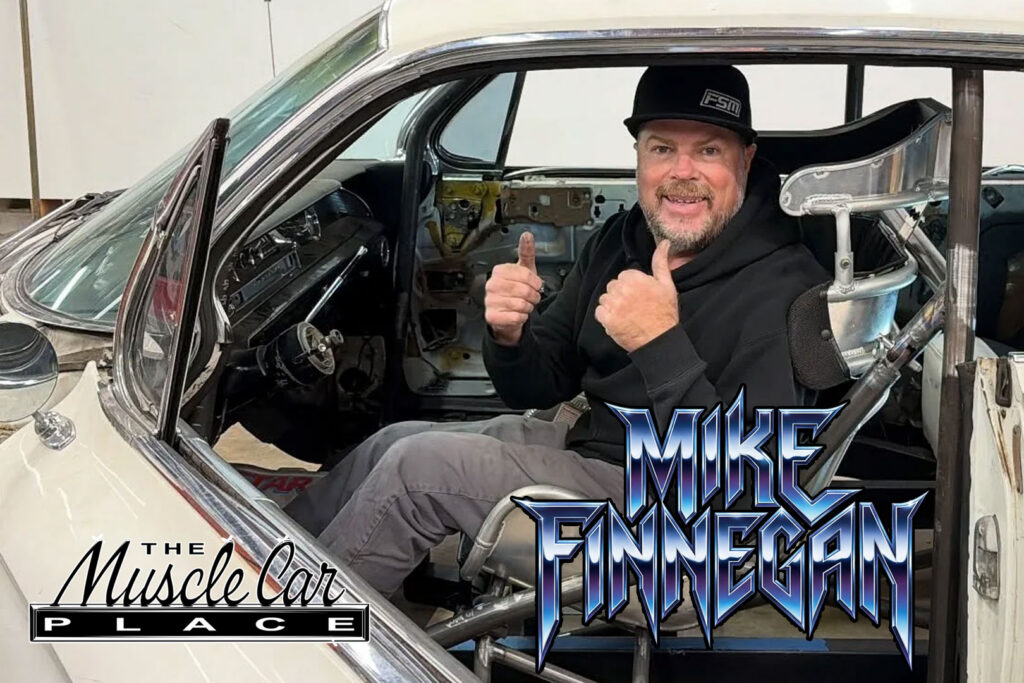
Mike Finnegan returns to The MuscleCar Place for a special edition episode, and as always, he brings the stories, honesty, and perspective that only he can deliver. From his early days on Roadkill to becoming a full-time YouTube creator with Finnegan’s Garage, Mike shares what life looks like after the 2024 shutdown of Motor Trend productions. What once felt uncertain turned into the perfect transition—giving him more time with family while opening the door to collaborate freely with friends and fellow creators in what he calls the “Wild Wild West” of YouTube.
We also dig into the fate of fan-favorite Roadkill cars, the reality behind automotive media today, and what’s next in Mike’s world—from wild shop builds to recovering from a recent dirt bike injury. Along the way, Mike shares his thoughts on Cletus McFarland’s impact on NASCAR, the future of shows like The Grand Tour, and why real chemistry—not scripted production—is what truly makes automotive content work.
TMCP #639: Jason Noel – Fat Fender Garage, The 20-Year Overnight Success
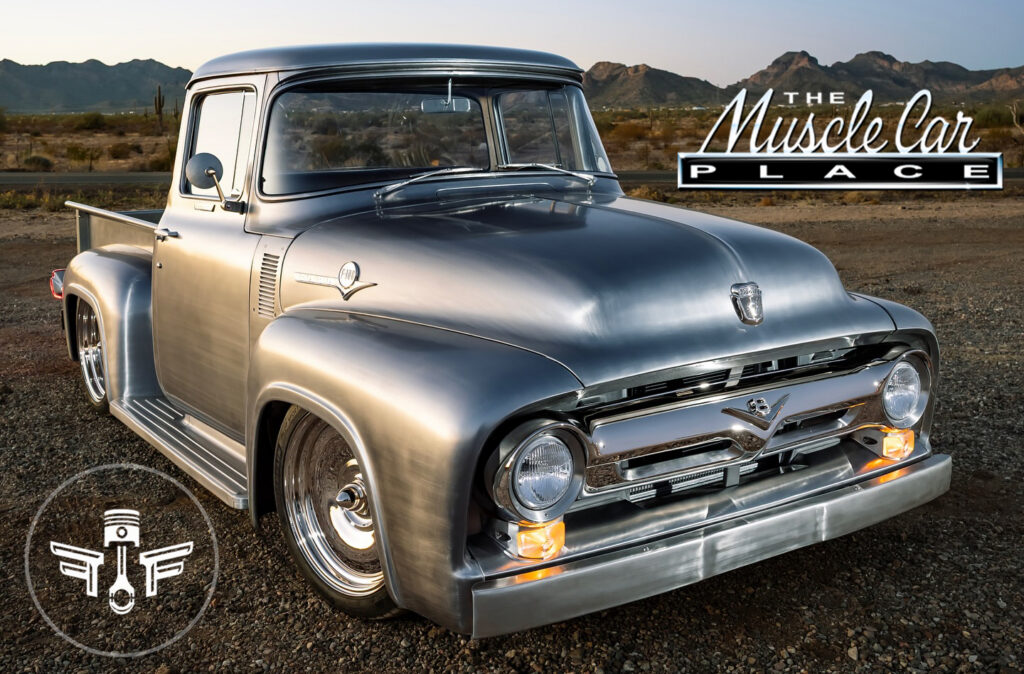
Jason Noel, founder of Fat Fender Garage in Gilbert, Arizona, joins us this week with a story that’s less about horsepower at the beginning — and more about perseverance. Jason didn’t grow up chasing race cars. He was a finish carpenter by trade, building doors and crown molding before the 2008 housing collapse wiped out his business and forced a complete reset. What came next wasn’t a hobby gone wild — it was a deliberate rebuild. One old truck led to another, then to customer builds, then to something much bigger than he ever planned.
Today, Fat Fender Garage is a full-scale restoration shop specializing in classic Ford and Chevy trucks, known especially for early Ford F-100s and modern Coyote swaps. Along the way, Jason learned that if he wanted the quality and timelines his customers expected, he’d have to take control of the process. That meant bringing paint, upholstery, parts manufacturing, and now even chassis production in-house. What started as flipping a few trucks for fun has grown into a 75-person operation building high-end custom vehicles and engineered components designed to compete at the top of the industry.
In this episode, Jason shares the hard lessons from early customer builds, the philosophy behind vertical integration, why he chose to compete directly with established chassis manufacturers, and how telling the real story — wins and failures alike — became the backbone of Fat Fender’s marketing success. If you’re into classic trucks, modern restomods, or the realities of scaling a business in the automotive aftermarket, this is a conversation you won’t want to miss.