Podcast: Play in new window | Download
Subscribe: Apple Podcasts | Spotify | RSS
FEATURE INTERVIEWS:
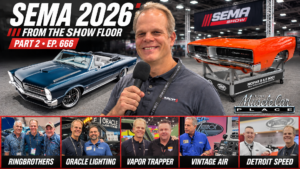
SEMA SHOW SPECIAL 2026 – Episode #2
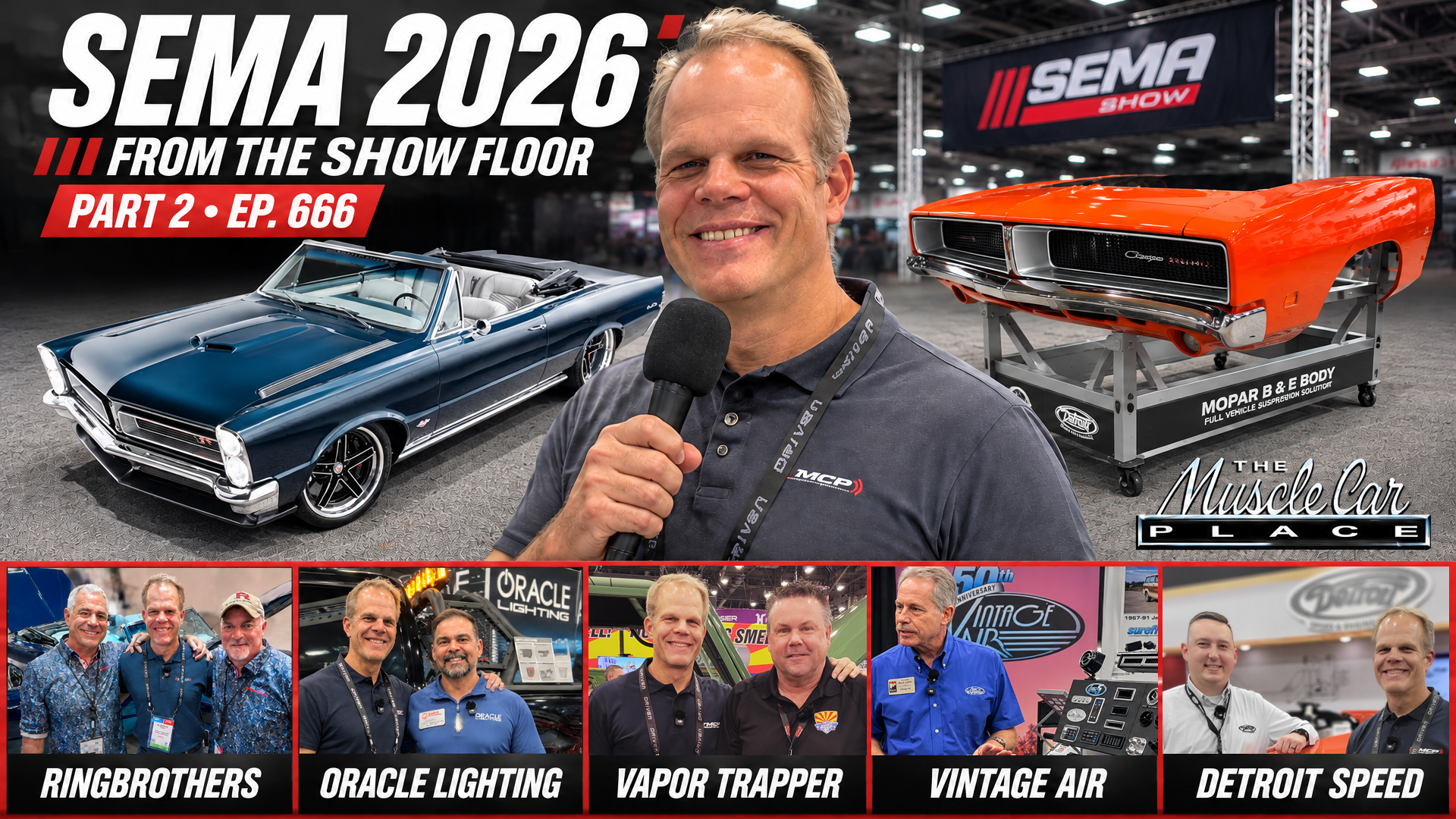
A customer’s memories of his mother’s Pontiac become a Ringbrothers custom. A teenager’s four-cylinder Mustang starts a journey that leads to Oracle Lighting. A restoration shop owner gets tired of delivering beautiful cars that leave their customers’ garages smelling like gasoline—and decides to build a solution. Our second installment from SEMA 2026 brings together five conversations about the people, ideas, and hard-earned experience behind the cars and parts we love.
For TMCP #666, Rob Kibbe catches up with Mike and Jim Ring, Justin Hartenstein of Oracle Lighting, Tom Mischke of Vapor Trapper, Rick Love of Vintage Air, and Zach Arlen of Detroit Speed. There’s plenty of engineering to explore, from a carefully widened Pontiac to a new suspension package for classic Mopars. But some of the best moments come when the conversation moves beyond the display: how a business began, why a builder chose to preserve a particular detail, and what it means when someone in the industry takes the time to help. Listen to the complete episode above, then watch each individual interview below for a closer look at the builds and products.
RingBrothers:
BILLIE, a Mother’s Pontiac, and
the Art of Knowing What to Keep
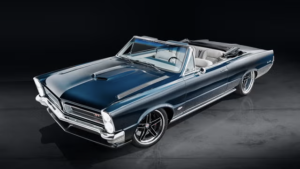
The story behind BILLIE begins with a Pontiac convertible a woman never forgot. She had received a GTO while working at a Pontiac dealership, but difficult circumstances eventually forced her to sell it. Years later, her son approached Mike and Jim Ring about building a car inspired by those memories, with its color and a wooden steering wheel among the details that mattered most. He initially believed his mother’s car had been a 1967, but the brothers preferred the 1965—and after they agreed on that direction, he discovered his mother’s Pontiac had actually been a ’65 all along.
Finding the starting point brought a different kind of surprise. The Pontiac Tempest they sourced looked promising until they discovered just how thoroughly rust had worked its way through it, including areas inside the cabin they had hoped to reuse. From there, the project became an exercise in changing the proportions while keeping the identity intact: the front fenders moved outward 2½ inches per side, the rear quarters moved outward, and the surrounding bodywork had to follow. A wider hood, integrated vents, a hood scoop enlarged by 20 percent, and reworked bumpers and rear detailing helped make those changes look natural.
Underneath, BILLIE combines a Roadster Shop chassis with independent rear suspension, an LT4, and a 10-speed automatic. Inside, beautifully trimmed Ford Galaxie 500 seats were adapted and detailed to suit the Pontiac, while the cabin preserves the character that made the original appealing. Mike explains that the hardest part was making the car look as though they hadn’t done anything. That leads to one of the interview’s best discussions: why some custom designs hold up over time, why others don’t, and what the brothers have learned about protecting the features people loved in the first place.
The conversation also takes an unexpected turn when Mike and Jim share their account of the dispute surrounding their previous Aston Martin build. They explicitly clarify that it involved a cease-and-desist, not a lawsuit, and say the matter had been settled before this interview. Hearing them describe the pressure on their small Wisconsin operation adds a very human dimension to a company whose cars attract worldwide attention. Between that discussion, their thoughts on the freedom to modify cars, and the inevitable brotherly jokes, this visit goes well beyond a typical SEMA walkaround.
Explore Ringbrothers, then watch the full interview below.
Oracle Lighting:
Keep the Original Lenses, Change What’s Behind Them
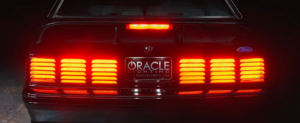
Rob arrives at Oracle Lighting expecting to see replacement taillight assemblies. Justin Hartenstein quickly explains the difference: these retrofits put modern LED panels inside the car’s existing housings, allowing owners to keep their original lenses and factory details. Justin walks through how the circuit boards fit into the assemblies and describes wiring designed to use the original connectors without splicing, soldering, or adding separate resistors and relays. For someone who wants updated lighting while retaining the appearance of a favorite classic, that approach makes the display worth a much closer look.
The engineering becomes especially interesting when Rob asks why the lights have an even glow instead of the visible dots he associates with some LED conversions. Justin explains how the spacing and placement of the LEDs must work with the original lens’s diffusion pattern, with more than 3,000 LEDs in the Charger product discussed at the booth. There’s personality in the designs, too: the third-generation Camaro retrofit features a retro equalizer-style startup sequence, along with sequential turn signals. Fox-body Mustangs also receive attention, and it soon becomes clear that Justin’s connection to those cars is personal.
His first car was an ’87 Mustang LX hatchback, and a four-cylinder was all his parents and the insurance company would allow. A magazine article about installing a 351 Windsor gave him an idea, and at sixteen he was learning engine building through magazines, library research, and the experience of doing the work himself. The Mustang eventually gained more power than its original transmission and rear axle could handle—and after all that effort, Justin says it was stolen just as he finally got it finished. Yet the experience made him a gearhead, and the garage projects that followed grew into a business launched in 1999, beginning with modified clear Fox-body lighting lenses sold at swap meets.
Today, Justin describes a New Orleans operation with approximately 30 employees and 5,000 part numbers, along with a recently expanded footprint. The scale has changed, but his explanation of how it happened is familiar to anyone who has made something for their own car and had a friend ask for one. He built things he enjoyed, other enthusiasts wanted them, and each sale helped fund the next idea. Listen for the story behind the company, then watch the video to see why these lighting demonstrations caught our attention.
Find out more at Oracle Lighting, then watch the full interview below.
Vapor Trapper:
A Beautiful Build Shouldn’t Leave the Garage Smelling Like Gas
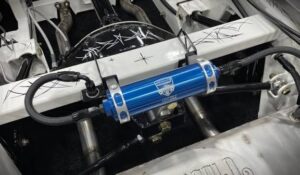
Tom Mischke had spent years building high-end custom vehicles when a familiar customer complaint became impossible to ignore. Owners loved their finished cars and trucks, but they didn’t understand why a freshly built vehicle could make the garage smell like gasoline when their modern daily driver didn’t. Tom saw an opportunity to address fuel-tank vent odors with a component suited to custom installations. The result was Vapor Trapper, a serviceable charcoal canister whose housing can be opened so the charcoal media can be replaced.
That ability to service the unit is central to Tom’s approach, but packaging has driven much of the product’s development. The original eight-inch model led to six-inch and four-inch versions as installations in smaller vehicles revealed a need for more compact options. At SEMA, Tom also shows Rob a low-profile version with recessed mounting holes, designed to bolt directly to a suitable surface such as a frame rail. Different fittings accommodate a range of vent-line sizes, while the smaller housings trade some charcoal capacity for installation flexibility.
Tom says a properly installed unit that keeps liquid fuel out of the charcoal can typically go five to eight years between media changes, and he quotes $29.99 for a recharge kit during the interview. He also explains that smaller units may require servicing sooner and discusses opportunities beyond classic cars, including side-by-sides and marine products in development. With his son taking on more responsibility in the restoration business, Tom is increasingly focused on growing the product that came from those customer conversations. It’s a useful example of a shop owner turning a recurring problem into something other builders can incorporate into their own work.
There’s a connection to the rest of our SEMA coverage, too. Tom estimates that Vapor Trapper is fitted to 60 to 70 vehicles at this year’s show, naming builders including Ringbrothers, Fat Fender Garage, and Detroit Speed among its users. That puts this relatively small component behind the scenes of some very elaborate projects. Rob’s first visit with Tom becomes a conversation about what happens after the customer takes delivery—and why that experience matters just as much as the reveal.
Learn more at Vapor Trapper, then watch the full interview below.

Vintage Air:
Keeping Classics Comfortable, and Helping People Along the Way
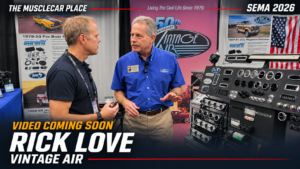
Before the product discussion begins, Rob takes Rick Love back to his first SEMA trip in 2010. Rob still had a day job, was finding his way around the industry, and received a ride to the Optima Ultimate Street Car Invitational in Tom Farrington’s ’66 Chevelle. Tom told him there was someone he should meet if he wanted to understand the business: Rick Love. Rick took the time to talk then, and their annual conversations have continued ever since.
That history gives this visit extra meaning when Rob shares in the episode introduction that Rick was inducted into the ARMO Hall of Fame—an honor Rob learned about after their interview. Rick hadn’t brought it up during their conversation. Rob’s appreciation goes beyond Vintage Air’s products to the advice, introductions, and help Rick has provided over the years. It’s a fitting lead-in to another visit with someone whose enthusiasm for making old vehicles more enjoyable to drive remains easy to hear.
On the product side, Rick is particularly excited about expanding brushless cooling-fan kits, including applications for 1967–72 Chevy pickups and 1964–67 Chevelles. He describes an 850-watt, 19-inch fan with variable-speed, demand-driven operation and explains why he favors that approach for consistent temperatures and smoother electrical demand. The conversation also covers SureFit developments for early S10 pickups, Scout IIs, Toyota FJ40s and FJ60s, and Impalas, alongside existing support for vehicles such as the 240Z, 260Z, and 280Z. Rick understands the appeal of using an older vehicle regularly: his own daily driver is an ’87 Monte Carlo Aero Coupe equipped with Vintage Air.
Inside the cabin, the emphasis is on giving builders choices that suit the car. Rick explains how RGB control-panel lighting can coordinate with Dakota Digital gauges or reproduce the warmer appearance of incandescent illumination, and he shares how Vintage Air helped Ringbrothers retain BILLIE’s original-style controls through electronic conversion. He also demonstrates a portable eight-segment hose crimper, quoting $650 with tooling at the show, with a loaner program available for installers who only need to make a few crimps. From the cooling system to the control panel and hose routing, this interview is full of the finishing details that help turn a project into a car you want to drive.
Explore Vintage Air, then watch the full interview below.
Detroit Speed:
Finally, a Full Pro-Touring Approach for Classic Mopars
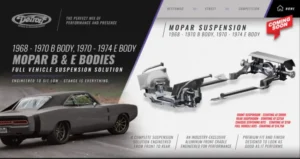
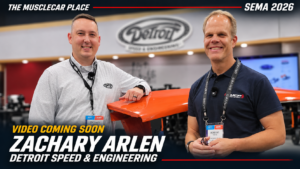
An orange 1969 Charger display is a reliable way to get Rob’s attention, and Detroit Speed build shop manager Zach Arlen has plenty to show him. The company is bringing its Aluma-Frame approach to 1968–70 Mopar B-bodies and 1970–74 E-bodies, drawing on experience gained with its earlier Mustang system. Rob already runs Detroit Speed equipment on his ’64 Chevelle, so he’s eager to hear what the Mopar package offers. Zach even opens with an apology for making Chrysler enthusiasts wait so long.
Up front, the package centers on a cast-aluminum cradle, forged-aluminum upper and lower control arms, and forged uprights, with mount choices for small-block Chrysler, big-block Chrysler, and Gen III Hemi engines. It provides C6-style brake mounting provisions while preserving the familiar 5-on-4½-inch Mopar wheel bolt pattern. Zach explains how the original K-frame architecture provided useful factory mounting points, while the broader system addresses the support needed around the new suspension. It’s a detailed discussion of how the components fit together, including planned inner-apron pieces and additional reinforcement.
At the rear, the QUADRALink package uses a parallel four-link with a track bar and rear sway bar, with a crossmember designed to accommodate exhaust up to 3½ inches. Zach explains how the Swivel-Link arrangement helps articulation and reduces binding, and how multiple lower coilover mounting positions provide another way to adjust ride height. Ford nine-inch options are part of the discussion, along with brackets for owners adapting an existing Dana 60. He also makes clear that the rear installation involves fabrication to the factory frame rails, with reinforcement designed into the package.
Zach describes a design target of a 275-width front tire and up to a 345 rear, generally recommending 18-inch wheels, although some 17-inch wheels can fit. At the time of the interview, he gives March as the expected availability for suspension and chassis-reinforcement components, with the inner aprons still to follow. He also shares plans for an 80,000-square-foot manufacturing facility supporting Detroit Speed and QA1. For Mopar owners considering a serious pro-touring build, this is a chance to hear the thinking behind the system directly from the team—and for Rob, it’s a chance to get someone to admit there might be a little General Lee inspiration in that orange display.
See more at Detroit Speed, then watch the full interview below.
Dallas Kibbe Racing — One More Run in the Car That Started It
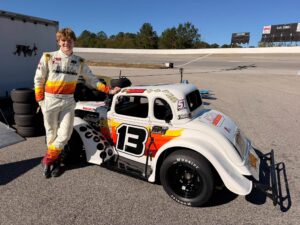
Away from the SEMA floor, this episode’s Dallas Kibbe Racing update marks the close of an important chapter. Rob and Dallas are heading to the INEX Asphalt Nationals after a season built around taking on the toughest competition they could find. Rob explains why he considers the year successful regardless of the final result: the goal was rapid improvement, and Dallas has become a much more capable, competitive driver. With his full-season Legends racing chapter coming to an end, the next step is still taking shape, with a full-bodied car among the possibilities.
For this final event, Rob has arranged something personal: Dallas’s original body is going back on his original chassis, bringing the familiar car and its collection of stickers back together. Both have survived repairs, changes, and a lot of racing, making the reunion a fitting way to finish. Rob also shares that Dallas’s upcoming care for lingering concussion issues will be an important part of determining what comes next. Underneath the racing plans is a father looking forward to one more trip with his son in a car they know well.
The Dallas Kibbe Racing update is presented by Lexani Tires, Lionhart Tires, and Rolling Big Power Tires, available at SimpleTire. Use TURBO15 to save 15% on four participating tires before December 1.
More SEMA Stories Still to Come
This is the second of our three SEMA 2026 episodes, and there’s another round of conversations ahead—including Chip Foose. If you missed the first installment, catch up with TMCP #665 for Trans Am Worldwide, Roadster Shop, Holley and Classic Instruments, Arne Toman’s Bluesmobile, CTEK, and Fat Fender Garage. Listen to the complete episode at the top of this page, then explore the individual videos to see the details behind these conversations. Subscribe on Apple Podcasts, Spotify, or YouTube so the next installment is ready when you are.
The MuscleCar Place and our feature interviews are brought to you by National Parts Depot. Have a question for Rick Schmidt’s next Ask Rick appearance? Send it to robert@themusclecarplace.com—Rob is collecting Christmas-themed questions for an upcoming visit.
The MuscleCar Place is brought to you by National Parts Depot. Use code TURBO15 at SimpleTire for 15% off eligible Lexani, Lionhart, and RBP tires.
____________________________________________________________________________________________________________________________

Save 15% on Your Next Set of Tires
Need tires for your muscle car, truck or daily driver? Save 15% on a set of four participating Lexani, Lionhart or RBP tires through SimpleTire by using promo code TURBO15 at checkout. It’s an easy way to shop for the tires you need online and have them shipped directly to your home or a nearby installer.
____________________________________________________________________________________________________________________________
This interview sponsored by our pals at National Parts Depot – your premier source for muscle car restoration parts!